Vibrating objects undergo back-and-forth vibrations about a fixed location. Two physical quantities that describe these vibrations are frequency and period. While related, they have quite different definitions, meanings, and mathematics.
Getting your Trinity Audio player ready...
Hold down the T key for 3 seconds to activate the audio accessibility mode, at which point you can click the K key to pause and resume audio. Useful for the Check Your Understanding and See Answers.
Frequency and Period - help11
There are two similar versions of this question. Here is one of those versions:
Version 1:
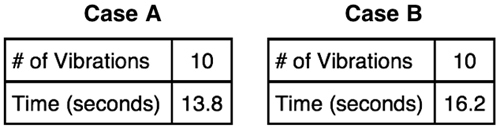
Anna Litical and Noah Formula are conducting an experiment with a Slinky. They are making measurements and determining the frequency and period. Consider two of the cases below. In which case did they vibrate the Slinky with the greatest frequency?
Try this link to The Physics Classroom Tutorial for more help with the concepts of frequency and period:
Frequency and Period